

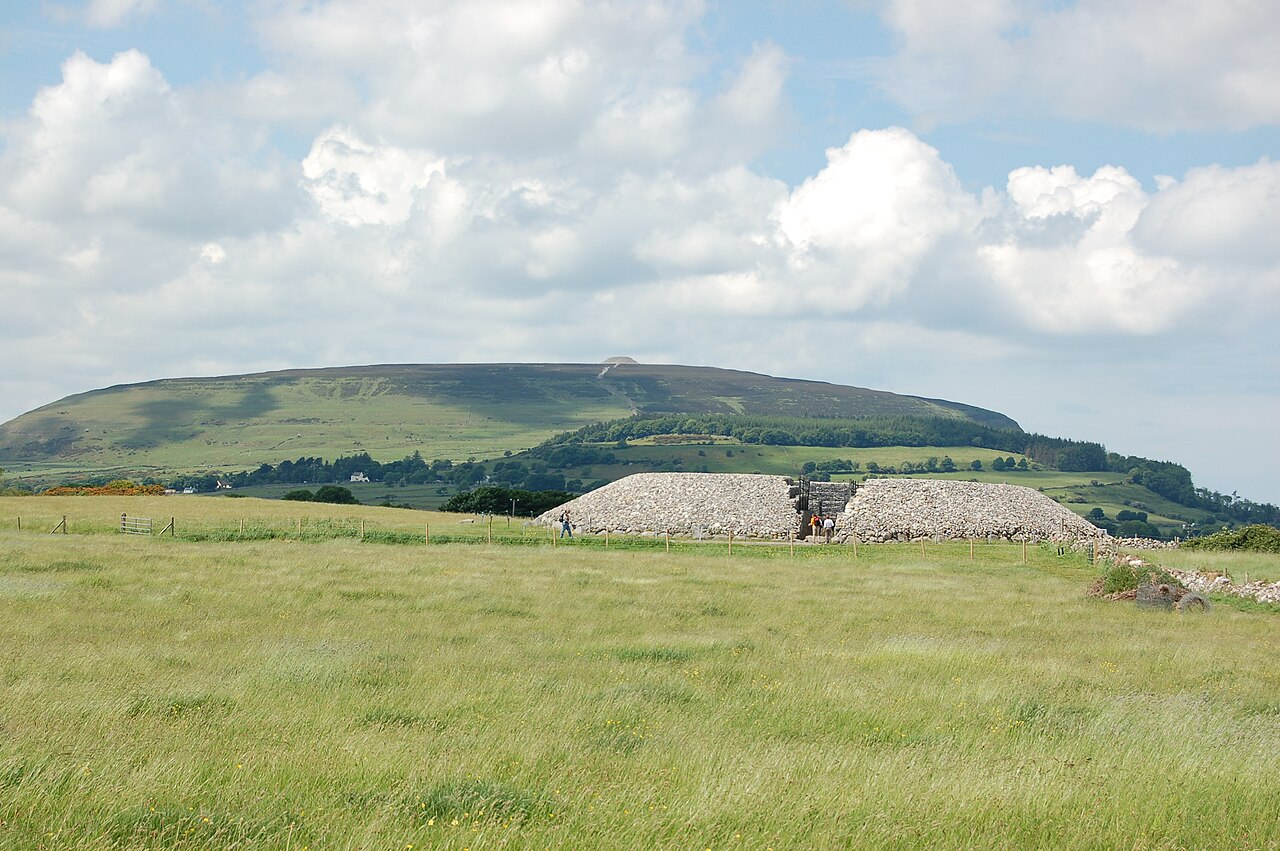
Knocknarea (Cnoc na Riabh) is a flat-topped limestone hill rising 327 metres above the Cúil Irra Peninsula west of Sligo town. The summit is dominated by Miosgán Médhbha — Queen Maeve's Cairn — an enormous Neolithic passage tomb mound measuring 55 metres in diameter and 10 metres high. The cairn is one of the largest unexcavated megalithic monuments in Ireland; its contents are unknown because it has never been archaeologically opened. Local tradition identifies it as the burial mound of the legendary Queen Maeve of Connacht.
The cairn is visible as a prominent bump on the skyline from Sligo town, from Strandhill beach below, and from as far away as Rosses Point and Benbulben across the bay. W.B. Yeats wrote about Knocknarea and Maeve frequently; the hill and the cairn are part of the mythological landscape of the Sligo countryside that shaped his poetry. The ascent takes approximately 45 minutes from the main car park at Primrose Grange; the path is well marked and straightforward but requires proper footwear.
From the summit the view extends north over Sligo Bay and the Atlantic toward Donegal, east to Benbulben and the Dartry Mountains, south over the drumlin country of south Sligo and west to the Mayo coastline. Strandhill village and beach are directly below — the combination of a beach morning and a Knocknarea ascent is a standard Sligo day. Please don't add stones to the cairn — existing tradition encourages this but the monument is being damaged by the accumulation of hundreds of thousands of visitor stones and archaeologists have requested that visitors stop.
Highlights
- Queen Maeve's Cairn — 55 m diameter, 10 m high, unexcavated Neolithic passage tomb; largest unexcavated megalith in Ireland
- Visible from most of northwest Ireland — a prominent flat-topped hill with a distinctive silhouette from Sligo town
- W.B. Yeats references Knocknarea throughout his poetry — it's a central image of his mythological Sligo landscape
- 45-minute ascent from the car park — good views over Sligo Bay, Strandhill and Benbulben from the top
- Directly above Strandhill beach — combine an Atlantic beach morning with the cairn ascent for a full Sligo day
Good to know
- →The ascent from Primrose Grange car park takes 45 minutes up, 30 minutes down — wear proper shoes; it's a limestone and grass path.
- →Do not add stones to the cairn — the monument is being damaged by accumulated visitor stones. The request from archaeologists is to stop this practice.
- →Strandhill village (15 min drive, directly below) has excellent surfing and seaweed baths — good for a before or after the climb.
- →The cairn is visible from Sligo town as a distinctive bump on the hill to the west — it's one of the best landscape orientation points for the region.
- →Combine with Carrowmore Megalithic Cemetery (20 min drive) for a full day of Neolithic Sligo.
Best Time to Visit
May–Sep for clear summit views. Early morning or evening gives the best light over Sligo Bay. Combine with Strandhill beach and Carrowmore Megalithic Cemetery for a full west Sligo day.
Getting There
Where to Stay



Nearby Attractions




Planning your visit
Free entry — no ticket needed. Add this stop to your Ireland route.
Add to your trip planPlan your full Ireland itinerary
Quick Facts
- Type
- Nature
- County
- Co. Sligo
- Province
- Connacht
- Entry
- Free
- Hours
- Open at all times (mountain)
- Allow
- 2–3 hours round trip
Destination guide
Wild Atlantic Way
Itinerary, best stops and local tips for West Coast · Ireland.
Read the guide →
← All attractions