

The Hill of Tara is a low limestone ridge rising about 155 metres above the Meath plain, but its significance in Irish history and mythology far exceeds its modest geography. This was the ceremonial capital of the High Kings of Ireland from the Iron Age into the early medieval period — the place where kings were crowned, assemblies held and the fate of the island decided. The Lia Fáil (Stone of Destiny) still stands here, reputedly roaring when touched by the rightful king.
The earthworks on and around Tara span 5,000 years, from Neolithic passage tombs (the Mound of the Hostages, c. 3,000 BC) through Bronze Age ring forts, Iron Age royal enclosures and early medieval Christian sites. The Ráith na Rí (Fort of the Kings) is the most visible feature — a large oval enclosure containing the Forradh (Royal Seat) and Cormac's House, two connected ring forts where the medieval annals record the inauguration of high kings.
The interpretive centre (small OPW charge) provides context for a landscape that is otherwise difficult to read. The views from the summit on a clear day extend over four provinces — this was the political centre of Ireland, and the geography makes the choice obvious. St Patrick preached on Tara in the 5th century; Brian Boru was High King here in 1002; Daniel O'Connell held a "Monster Meeting" here in 1843, attended by an estimated one million people.
Highlights
- Lia Fáil (Stone of Destiny) — the inauguration stone of the High Kings of Ireland, still standing on the hilltop
- Mound of the Hostages — a Neolithic passage tomb dating from around 3,000 BC, roughly contemporary with Newgrange
- Ráith na Rí (Fort of the Kings) — the main royal enclosure containing the Forradh and Cormac's House ring forts
- Views across four provinces on clear days — the political significance of this high point over the Irish midlands is immediately obvious
- 5,000 years of continuous occupation — Neolithic, Bronze Age, Iron Age, early Christian and medieval layers all present
Good to know
- →The hillside is freely accessible at all times; the interpretive centre (small fee) gives essential context for what you're looking at.
- →The earthworks are subtle from ground level — look at the satellite view on Google Maps before arriving to understand the layout.
- →Pair with Newgrange (30 min drive) for a full Boyne Valley day — both are in the same Meath landscape.
- →The hill is exposed and can be very windy — bring a layer even in summer.
- →Avoid the summer equinox weekends when New Age gatherings bring large crowds.
Best Time to Visit
May–Jun for atmospheric morning mists above the Meath plain. Nov 1 (Samhain) for historical resonance — the hill was a ritual site for millennia. Summer guided tours from the visitor centre add essential context to earthworks that are difficult to read unassisted.
Getting There
Common questions
Is the Hill of Tara free to visit?
The hill and earthworks are freely accessible at any time — there is a free car park. The OPW visitor centre in the former church charges a small admission fee (around €4 adults) for an introductory exhibition. The earthworks, standing stone and the panoramic views from the ridge are the main attractions and are all open air.
What can I see at the Hill of Tara today?
The visible monuments include the Ráith na Ríogh (Fort of the Kings), a large ceremonial enclosure; the Mound of the Hostages (a passage tomb dating to 2,500 BC); the standing stone known as the Lia Fáil (Stone of Destiny, against which the High Kings of Ireland were crowned); and the Ráith of the Synods, an early Christian assembly site. The earthworks are grass-covered and subtle — a good guidebook helps.
How far is the Hill of Tara from Dublin?
Tara is 40km northwest of Dublin — about 45 minutes by car via the M3. Bus Éireann runs a service from Dublin to Navan that stops near Tara (ask for the Tara village stop). From Navan, Tara is a 10-minute drive or a 45-minute walk.
How long should I spend at the Hill of Tara?
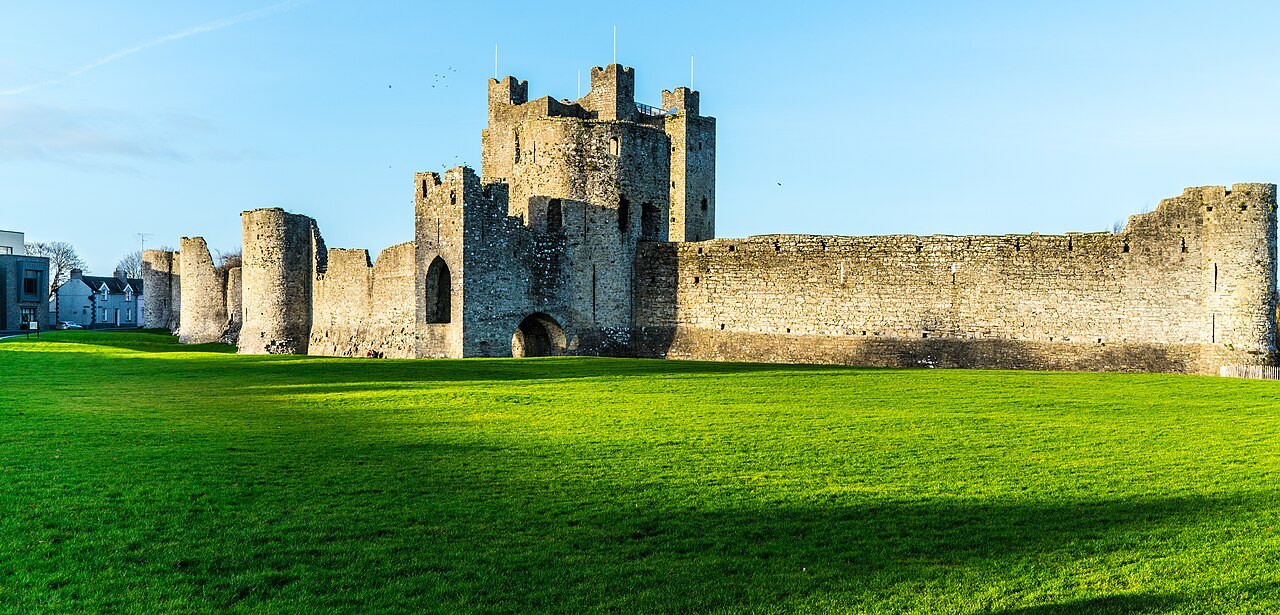
The visitor centre takes 30 minutes. A walk around the main monuments and the ridge takes another hour. From the top of the ridge, on a clear day, you can see into approximately 20 of Ireland's 32 counties. Tara pairs naturally with Newgrange (25 minutes east) and Trim Castle (25 minutes northwest) on a Boyne Valley day.
Nearby Attractions


More Heritage Attractions
See all →
Book this experience
★4.0· 8 reviews
Self-guided audio tour (VoiceMap)
VoiceMap self-guided audio tour of the Hill of Tara and its monuments.
Book now →Quick Facts
- Type
- Heritage
- County
- Co. Meath
- Province
- Leinster
- Entry
- Free
- Hours
- Site: year-round, free. Interpretive centre: seasonal (May–Sep)
- Allow
- 1–1.5 hours
Destination guide
Ireland's Ancient East
Itinerary, best stops and local tips for Leinster & Munster · Ireland.
Read the guide →
← All attractions