
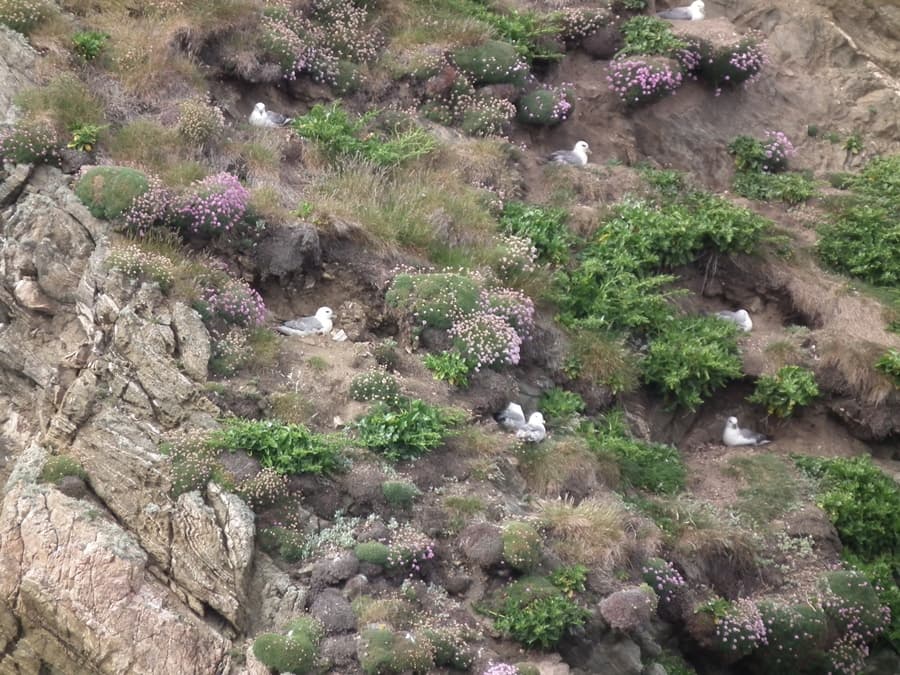
Erris Head is the northernmost point of the Mullet Peninsula, a narrow finger of land extending north from Belmullet into Blacksod Bay. The 5 km loop walk follows cliff paths and rough coastal track around the headland, with the Atlantic on three sides and a perspective that on clear days extends north to the Donegal coast and west over open ocean. This is the Ireland that the tourist trail largely misses — remote, wind-stripped, and elemental.
The walk takes 2–3 hours at a comfortable pace. The path is unmarked in places and the terrain can be wet; waterproof boots are essential. Parking is at the car park above the Danish Cellar, reached on the R313 north of Belmullet. Sheep graze the clifftop grass, and the cliffs are home to nesting seabirds including fulmars and kittiwakes in spring and summer. The lack of visitor infrastructure is the point — you will almost certainly have the headland to yourself outside summer weekends.
Erris Head is most rewarding as part of a day exploring the Belmullet peninsula. Blacksod Lighthouse, Belmullet town, and the tidal pool at the southern end of the peninsula are all within 20 km. The surrounding landscape of the Erris boglands — vast, flat, treeless — is unlike anywhere else in Ireland and has a bleak beauty that takes some time to settle into.
Highlights
- 5 km loop around the northernmost tip of the Mullet Peninsula — wild Atlantic edge with no facilities
- Clear-day views north to Donegal and west to open ocean — genuinely remote and uncrowded
- Nesting seabirds on the clifftops in spring and summer, including fulmars and kittiwakes
- Part of Ireland's most overlooked coastal landscape — the Erris boglands and Mullet Peninsula
Good to know
- →The path is unmarked in places — waterproof boots required, check weather before going.
- →Combine with Blacksod Sea Safari and the Belmullet tidal pool for a full Erris day.
- →There are no facilities at the headland — bring food and water from Belmullet (15 km).
- →The return route via the eastern cliff is the more dramatic direction — walk clockwise.
Best Time to Visit
May–Sep for best walking conditions. Summer evenings give long light over the Atlantic. Winter visits are dramatic but require full waterproofs and care on wet paths.
Getting There
Where to Stay
Nearby Attractions


Planning your visit
Free entry — no ticket needed. Add this stop to your Ireland route.
Add to your trip planPlan your full Ireland itinerary
Quick Facts
- Type
- Coastal
- County
- Co. Mayo
- Province
- Connacht
- Entry
- Free
- Hours
- Open year-round (public land)
- Allow
- 2–3 hours
Destination guide
Wild Atlantic Way
Itinerary, best stops and local tips for West Coast · Ireland.
Read the guide →
← All attractions