

Connemara National Park covers 2,957 hectares of bog, heathland, grassland and woodland in the mountains of northwest Galway. Established in 1980, it takes in part of the Twelve Bens mountain range, including Benbaun (729 m), the highest of the group. The park is managed by the National Parks and Wildlife Service and is free to enter. The visitor centre at Letterfrack has exhibits on the ecology and geology of the area.
The standard visitor experience is the Diamond Hill loop, a well-maintained mountain trail that climbs to 442 m and gives panoramic views of Connemara, the Twelve Bens, Kylemore Lough and the Atlantic islands. The lower loop takes about 1.5 hours; the upper loop (taking in the summit) takes 2–3 hours and involves some steep sections and rough terrain. It's the most walked mountain trail in Connacht and deservedly so — the views from the top, on a clear day, are exceptional.
The park is also one of the few remaining habitats in Ireland for the Connemara pony, a native breed well adapted to the wet, rocky terrain. A small herd is kept in the park. The bog ecosystem, while easy to overlook, is one of the most important in Europe — blanket bog is one of Ireland's most extensive natural habitats, and Connemara has some of the best-preserved examples.
Highlights
- Diamond Hill (442 m) — the most popular mountain walk in Connacht, with views across Connemara and the Atlantic
- Part of the Twelve Bens range — Benbaun at 729 m is the highest peak of the group
- Free entry with a staffed visitor centre at Letterfrack with good geological and ecological exhibits
- One of the few places in Ireland to see Connemara ponies in their native landscape
- Blanket bog ecosystem — among the best-preserved in Europe, covering much of the park floor
Good to know
- →The upper Diamond Hill loop is worth doing over the lower loop — the views from the summit are significantly better.
- →Weather changes fast in Connemara. Bring waterproofs even in summer.
- →The visitor centre closes in winter but the park and trails remain open year-round.
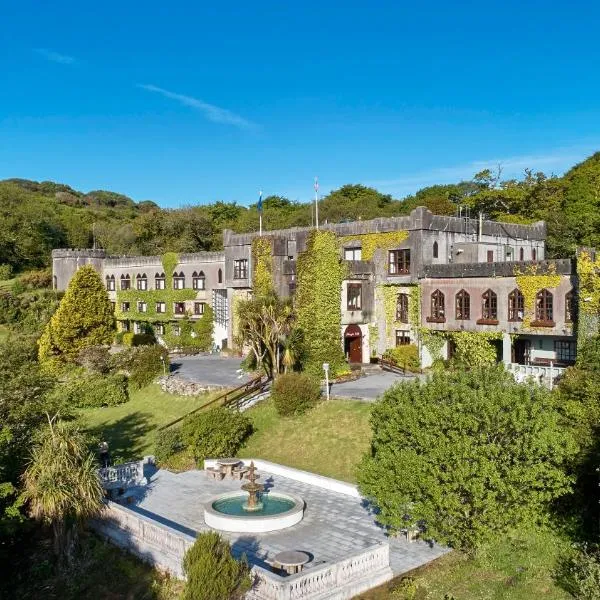
- →Kylemore Abbey is 4 km away — natural pairing for a full day.
- →The trail surface on Diamond Hill is well maintained but rocky near the top. Proper footwear is needed.
Best Time to Visit
May–Jun for wildflowers and good visibility on Diamond Hill; Sep for purple heather on the slopes. Avoid the summit ridge in mist — the upper section of the trail is exposed and navigation becomes difficult.
Getting There
Common questions
Is Connemara National Park free to visit?
The national park itself is free — the bog and mountain landscape, walking trails and scenic roads are open to all. The Diamond Hill loop walk (7.5km) is free and starts from the visitor centre near Letterfrack. The visitor centre has a small admission charge for its exhibition.
What is the best walk in Connemara National Park?
The Diamond Hill loop is the most popular — a 7.5km circuit with 360° views over Connemara's bogs, lakes and coastline. The upper section involves rough terrain and requires proper footwear. Allow 3–4 hours. More adventurous walkers can tackle the Twelve Bens — a challenging mountain range requiring experience and good navigation.
How far is Connemara from Galway city?
The national park visitor centre at Letterfrack is about 75km from Galway city — around 1.5 hours by car. The drive through Maam Cross and past the Connemara lakes is itself part of the experience. There is a limited bus service from Galway to Clifden, but a car is needed for the national park itself.
Where to Stay

Nearby Attractions


Planning your visit
Free entry — no ticket needed. Add this stop to your Ireland route.
Add to your trip planPlan your full Ireland itinerary
Quick Facts
- Type
- Nature
- County
- Co. Galway
- Province
- Connacht
- Entry
- Free
- Hours
- Visitor centre: daily 09:00–17:30 (Mar–Oct). Trails open year-round.
- Allow
- 2–4 hours depending on trail
Destination guide
Wild Atlantic Way
Itinerary, best stops and local tips for West Coast · Ireland.
Read the guide →
← All attractions